


KUALA LUMPUR, July 31 — The fish arrived at the table. There isn’t much on the plate, just the fish accompanied by a plastic figurine of a man fishing.
A server brings bowls of oil, seasoned soy sauce, crispy garlic bits, thin strips of fried ginger, and coriander for garnishing, followed by two wide spoons that she wields like twin axes.
After a brief pause to allow me to whip my phone out and hit record like a gormless influencer, she begins cutting into the fish.
Crrr-ack. Crisped up by the careful application of hot oil, the scales and skin shatter like glass.
Hot steam escapes as she pulls open a part of the fish’s abdomen to reveal a large sac of roe and the liver.
As she portions out the flesh, the bones are so soft they fall apart under the slightest bit of pressure.
This is ikan terubuk, a species of fish found mostly in brackish water — salty water found in estuaries and mangrove swamps, but not the open ocean.
Historically, it was prized for its roe rather than its flesh, which posed a challenge when eating due to its many fine bones.
It’s a specialty (RM38 per 100 grams) that must be ordered a day in advance at De Maw, a Chinese restaurant in Pudu Ulu, Cheras.
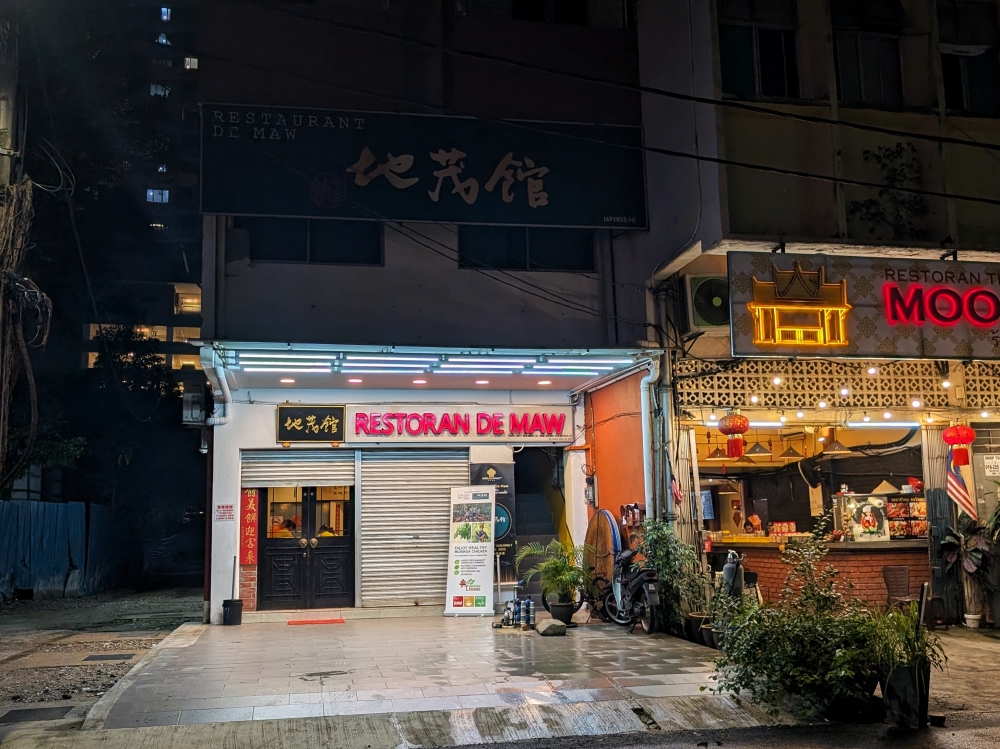
De Maw specialises in wild-caught freshwater fish, usually steamed — but the bony ikan terubuk gets a different treatment.
First, there is a 10-hour slow cooking process.
The specifics are a trade secret, but it renders the bones soft and edible like pressure cooking, while keeping the flesh moist and tender.
The fish is a squishy mass by this point, so hot oil is ladled over the scales and skin to provide a crisp contrast to the flesh, and a lucky few diners on the table will get to indulge in some prized liver or roe.
A fish this size requires a decent group to tackle, and the rest of De Maw’s menu is more than capable of handling it.
The restaurant’s been around for 23 years, and its offerings reach well outside the usual Malaysian Chinese repertoire.
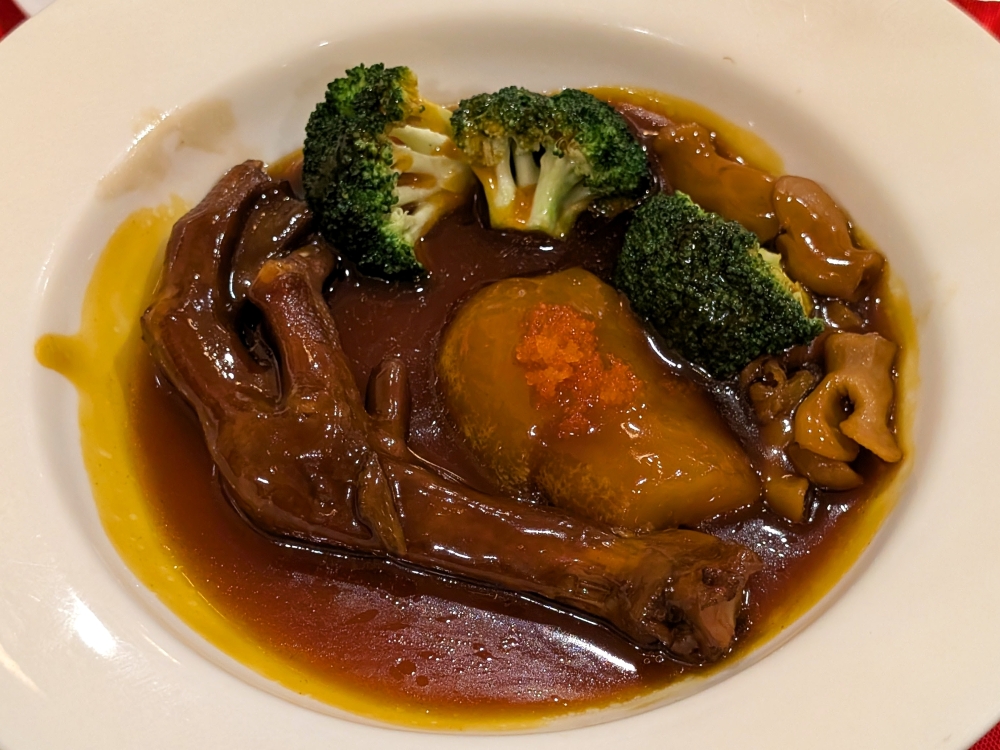
The Northern Chinese hot braised goose web set is an exhibition of Chinese textural delicacies, with gelatinous goose web, spongy sea cucumber and chewy fish maw blanketed in velvety braising liquid.
It is RM40 per portion and requires at least two orders, but unless there’s a diner the rest of the group vehemently dislikes, it’s best to get everyone a portion of their own.
The slippery, sticky sauce coats the mouth while you suck and slurp on the goose web, and its soy-based profile is sweet and slightly spicy.
If you are the type who brings wine to this sort of meal, it pairs beautifully with a Burgundy-style Pinot noir — the red cherries, raspberry and low tannins complement the sauce.
Where fine dining restaurants have their locally-sourced, sustainably grown chicken, De Maw has free-range birds raised on a diet of moringa leaves.
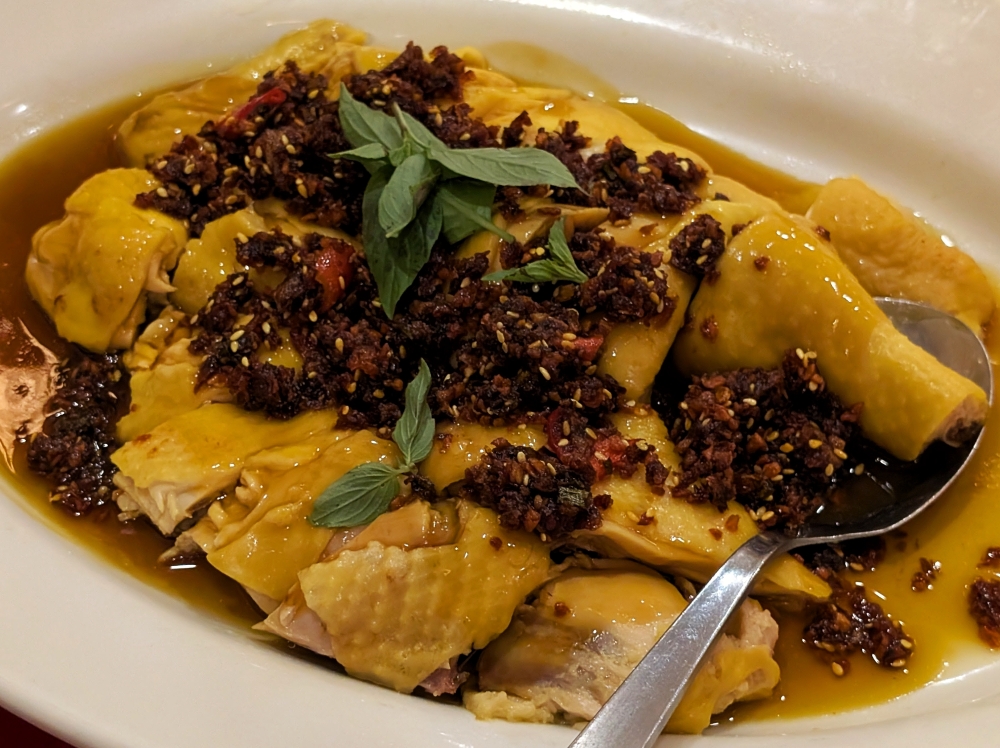
The recommended way to experience this is three-cup chicken with a “fiery Sichuan essence” (RM68), a combination of three different classic Chinese chicken preparations in one dish.
Half a chicken is poached, like Cantonese white-cut chicken.
It is then flavoured with the three-cup chicken base of sesame oil, soy sauce and Shaoxing wine, and finally topped with a crispy chilli-oil dressing that evokes the tongue-tingling characteristics of kou shui ji, or mouthwatering chicken, a classic Sichuan cold chicken dish.
Each preparation announces itself in harmony — the clean savouriness, the sweet sesame and soy, and the heat of the chilli — but the most distinct part of the dish is the meaty, supple texture of the chicken.
This bird must’ve run like an Olympian.
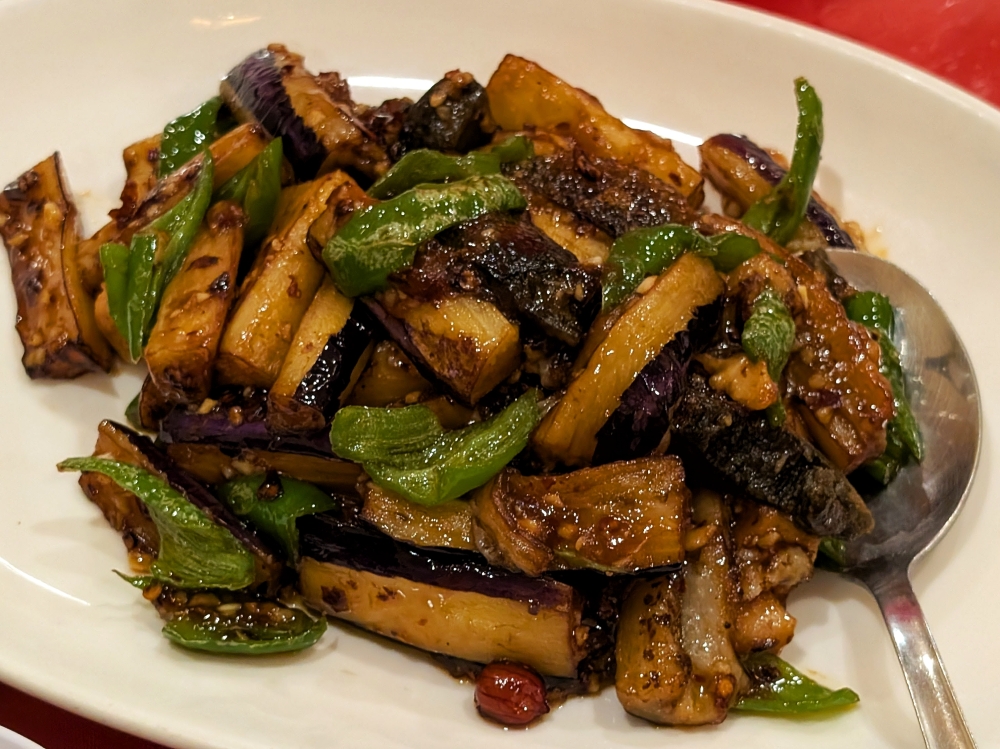
Also beyond the usual Malaysian Chinese repertoire, the “new flavoured” fried brinjal (RM28) has strips of eggplant wok-fried with century egg, peanuts and screw pepper, the large green pepper that’s a staple of Sichuan and Hunan cuisines.
It famously features in the iconic Hunan dish xiao chao rou, a stir-fry of thinly sliced pork belly and screw peppers in a fermented black bean base. Here, it lends its warm, aromatic sweetness to the eggplant, which wears it well.
De Maw isn’t the sort of Chinese restaurant you just saunter into for a quick meal, trusting that they do the usual fare competently.
It’s not a jack of all trades restaurant.
Here, the draw lies in the handful of specialities hard to find elsewhere.
This is one to plan around — a place to bring a group looking for something different than the usual Chinese meal.
De Maw Restaurant
18, Jalan Pudu Ulu,
Cheras, Kuala Lumpur.
Open daily, 11.30am-2.30pm, 6-10.30pm
Tel: 03-9285 7833
Facebook:
* This is an independent review where the writer paid for the meal.
* Follow us on Instagram @ for more food gems.
* Follow Ethan Lau on Instagram @ for more edible fish bones and braised goose webs.


