


JULY 31 — Foreign Minister Mohamad Hasan’s suggestion that Malaysia might reconsider UNHCR’s presence over its “refusal to cooperate” is troubling and vague. What exactly does that mean? If there are concerns about registration, screening or information-sharing, those should be resolved through transparent negotiation, not threats against the agency mandated to protect refugees.
If the government wants better screening or more oversight, it should build that framework through negotiation. But a country that speaks about humanitarianism, champions the Palestinian cause, and claims a responsible seat in the international community can’t treat refugees or the agency protecting them as an inconvenience when the numbers become politically awkward.
There’s also an obvious question the government avoids: why not ratify the 1951 Refugee Convention and its 1967 Protocol? Ratification wouldn’t solve everything, but it would replace the current legal grey zone, including ad hoc measures like the DPP registration programme, with a clear framework of rights and responsibilities.
Refugees don’t come to Malaysia because UNHCR has an office in Kuala Lumpur. They come fleeing war and persecution in Myanmar, Afghanistan, Syria and elsewhere. Removing the agency wouldn’t change that reality. It would just make vulnerable people less visible and more exposed to exploitation and abuse.
There also needs to be honesty about resettlement. UNHCR cannot unilaterally relocate refugees; a receiving country must agree to admit them, and globally fewer than one per cent of refugees are ever resettled. Framing UNHCR as the obstacle to a desired solution misunderstands or misrepresents how resettlement actually works.
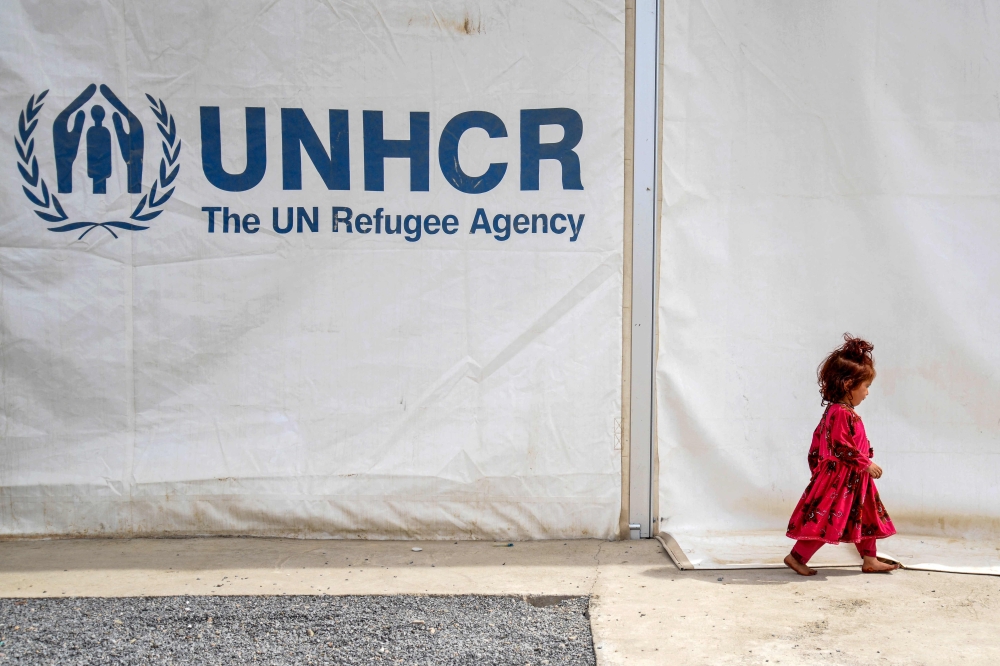
The timing matters too. With mass displacement continuing in Myanmar, Sudan, Gaza and Ukraine, UNHCR’s role isn’t something to switch on and off for convenience. Malaysia itself hosts more than 222,000 registered refugees and asylum-seekers as of June 2026, including over 64,000 children — real people needing protection and documentation, not abstractions in a policy dispute.
Malaysia is entitled to demand accountability and better management of its refugee system. The path to that is law and policy, starting with ratifying the Refugee Convention and building a national asylum framework.
It’s definitely not through confrontation with the institution currently holding the system together.
The following are our specific recommendations to the government:
Publish the government's concerns, supported by evidence, and refrain from making vague assertions on such matters which have significant humanitarian, legal and diplomatic implications. Transparency is essential in building public trust. The public has a right to know:
- Make public the full nature of the dispute. What specific issues the government has with UNHCR, and what is the legal basis for these concerns?
- What assessment has the government made of the potential impact on refugees, asylum seekers, public administration, and Malaysia’s international commitments, including under the Universal Periodic Review, CEDAW and CRC processes, if UNHCR’s role is reduced or terminated?
- Present a clear, transparent, and accountable alternative that would address refugee registration, documentation, status determination, and the management of humanitarian coordination, including access to basic services and safeguards against arbitrary detention and exploitation.
- Ratify the Refugee Convention 1951 and develop a national asylum framework.
- Institutionalise a formal multi-stakeholder engagement process. As an urgent action, the government should organise an immediate multi-stakeholder consultation, including UNHCR, relevant government agencies, parliamentarians, civil society organisations, and affected refugee communities, in determining a resolution to this dispute and to develop a more sustainable framework of engagement and support.
Any decision to fundamentally alter Malaysia's refugee governance should be proportionate, accountable, and informed by public scrutiny, rather than made without full disclosure of the underlying facts.
Endorsed by:
- Beyond Borders
- Monitoring Sustainability of Globalisation (MSN)
- ALTSEAN-Burma, Bangkok
- Yayasan Chow Kit
- Instant Café Theatre
- North South Initiative (NSI)
- Asia Justice and Rights (AJAR), Jakarta
- Geutanyoe Foundation, Aceh
- Women’s Aid Organisation (WAO)
- Reproductive Rights Advocacy Alliance Malaysia (RRAAM)
- Tenaganita
- SIUMAN Collective
- Pusat KOMAS
- Suara Rakyat Malaysia (SUARAM)
- Parti Sosialis Malaysia (PSM)
- End Detention Network (EDN)
- HOST International Foundation, Malaysia
- KLSCAH Civil Rights Committee
- Bersih
- Justice for Sisters
- Greater Equitable Measures (GEM)
- Fugee
- KL Queer Space
- JEJAKA
- Refuge for Refugees
- Centre for Independent Journalism (CIJ)
- Lucy A Iskandar Archives of Tolerance
- Pride Borneo
- Young Lives Malaysia
- People Like Us Hang Out! (PLUHO)
- ASEAN SOGIE Caucus
* This is the personal opinion of the writer or publication and does not necessarily represent the views of NewsPulse.


