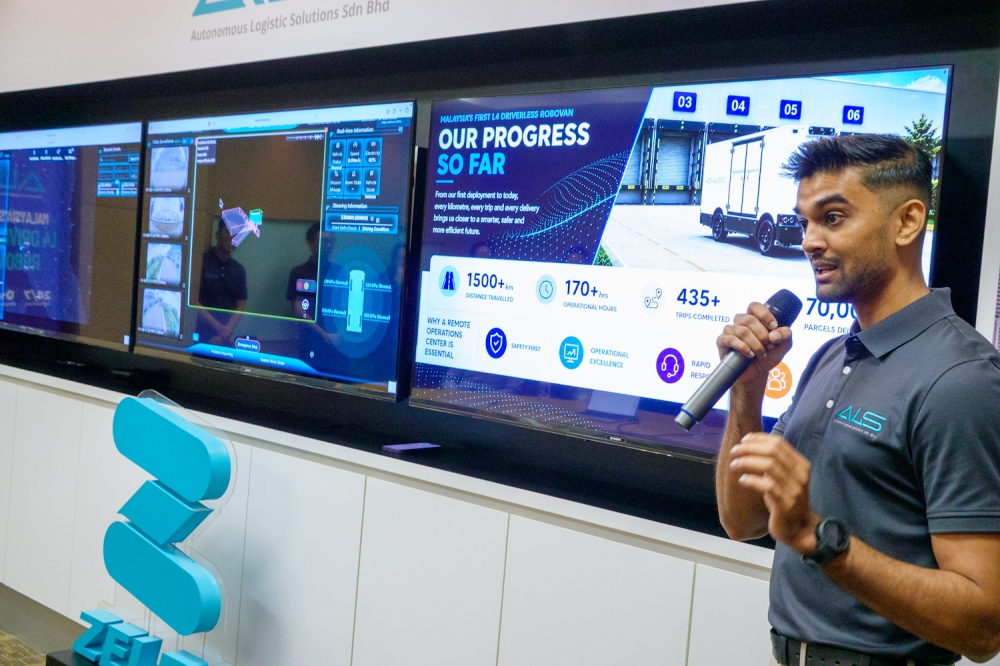


CYBERJAYA, July 31 — Malaysia’s first Remote Operations Centre (ROC) for autonomous logistics vehicles has been launched in Cyberjaya, paving the way for Level 4 autonomous vehicle trials on public roads.
The facility at CoPlace 9 Cyberjaya was developed by Autonomous Logistic Solutions Sdn Bhd (ALS) in collaboration with the Selangor Information Technology & Digital Economy Corporation (Sidec) and Cyberview Sdn Bhd, and will support trials along the 22km Cyberjaya Malaysia Autonomous Vehicle (MyAV) Route.
The route, approved by the Ministry of Transport (MoT) under Malaysia’s autonomous vehicle national regulatory sandbox, serves as a controlled public-road testbed for autonomous vehicle testing, data collection and the development of future regulatory frameworks.
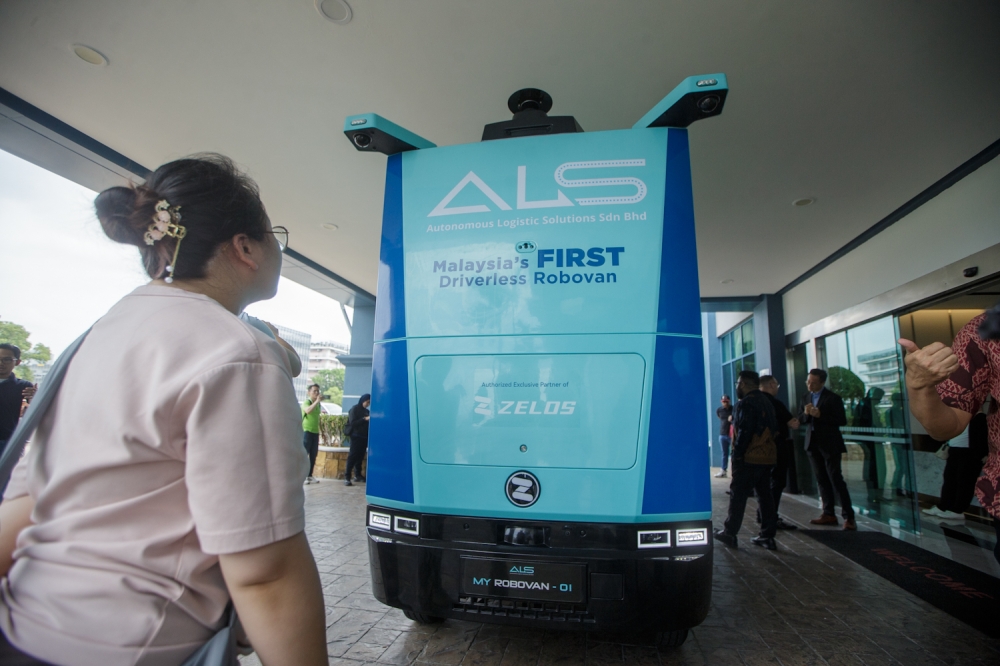
ALS managing director Alan Chong said the ROC would provide oversight for the company’s Level 4 autonomous logistics vehicle, the RoboVan, during upcoming trials.
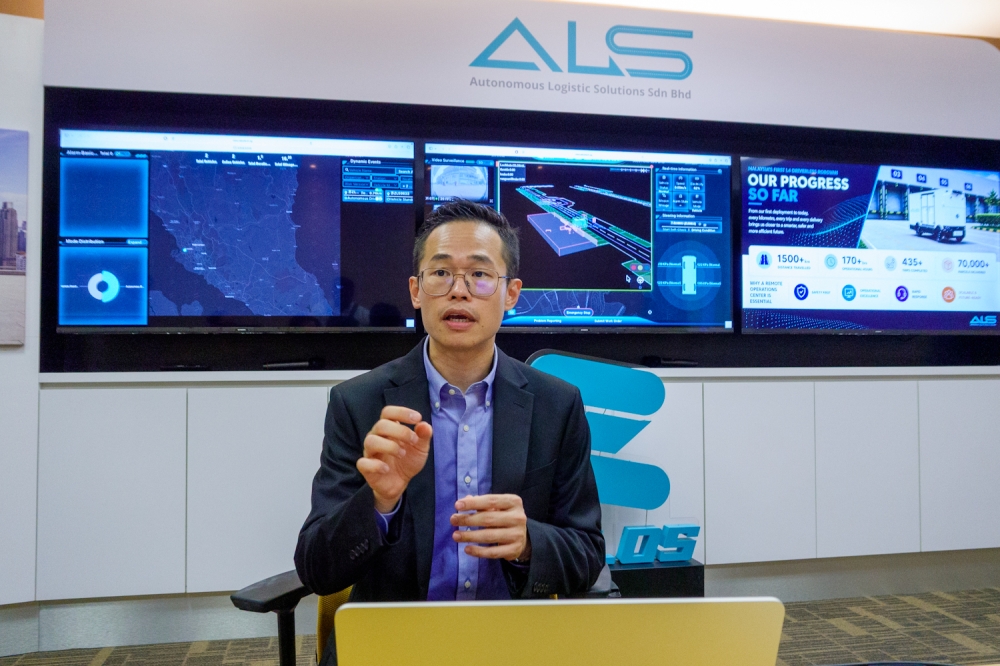
The facility functions as a central command centre, allowing operators to monitor the autonomous vehicle in real time through live video feeds, vehicle telemetry, route status and system diagnostics.
“Driverless doesn’t mean monitor-less. Every autonomous vehicle still requires human oversight to ensure the highest standards of safety, accountability, and operational reliability.
“Through our collaboration with SIDEC and Cyberview, we are establishing Malaysia’s first Remote Operations Center (ROC) as the foundation of a trusted autonomous logistics ecosystem, one that enables the safe, reliable, and scalable deployment of autonomous vehicles across Malaysia and the wider region,” Chong said.
The RoboVan trials are expected to begin in the coming months along the MyAV route, which covers areas including Persiaran Apec, Persiaran Cyberpoint and Persiaran Rimba, with the vehicle operating in real-world mixed traffic conditions.
First introduced in 2020 with support from the Transport Ministry, Sepang City Council (MPSepang) and Futurise, the MyAV route was initially a 7km testbed before being expanded by an additional 15km in 2025.
The 22km route now passes through various urban environments, including business districts, educational institutions, MRT stations, commercial centres, intersections and pedestrian crossings.
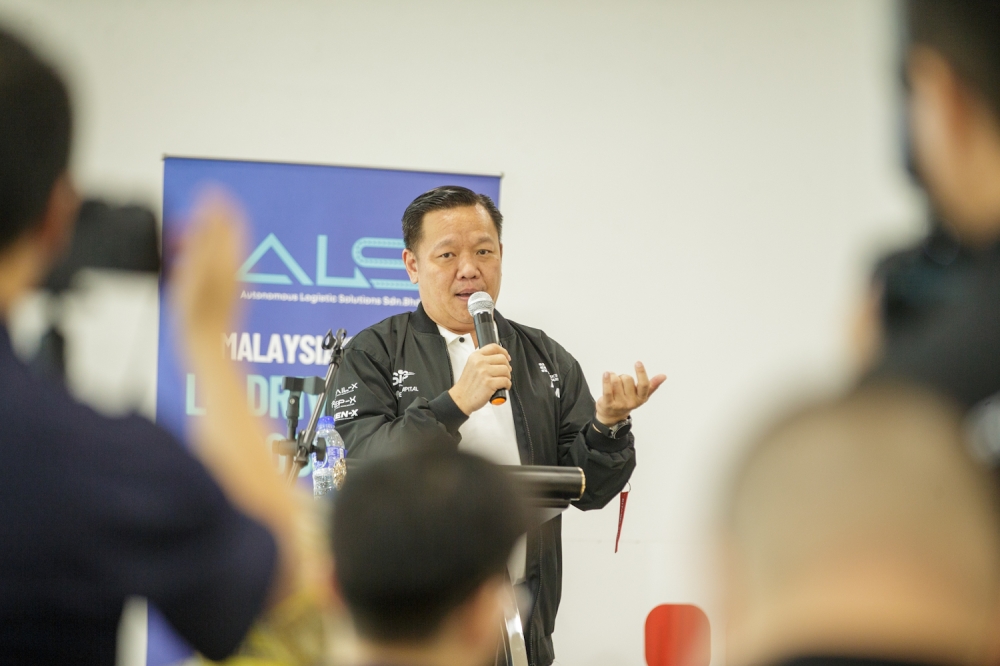
Sidec chief executive officer Yong Kai Ping said having a licence to test autonomous vehicles on public roads was only one part of the challenge, with responsible monitoring equally important.
“A licence to test on public roads is only half the story — the other half is how you supervise it responsibly once it’s out there.
“That’s what this Remote Operations Centre is for. It gives us the oversight infrastructure to run this trial safely, and it’s a concrete step in Selangor’s roadmap to build a real autonomous mobility ecosystem, not just a one-off pilot,” he said.
Beyond the current trials, ALS said its previous deployment of the RoboVan with Pos Malaysia at its warehouse compound showed potential for existing workers to take on new roles in the autonomous vehicle sector.
Chong said ALS had trained forklift operators who volunteered to dispatch the vehicle during the trial, showing there was interest among workers to develop new skills.
“So, that shows two things. Number one, there’s an appetite for drivers, operators to take up new skill.
“Secondly, this is a whole new industry that currently is untapped in Malaysia.
“We hope that in the future, if we were to actually train up remote operators, the first person that we train up should be the drivers,” he said, adding that driverless solutions would not completely replace human drivers.
Over the course of the public-road trials, ALS and Sidec will monitor the vehicle’s performance across various real-world scenarios in Cyberjaya, with the findings expected to contribute to future standards and regulatory frameworks for autonomous logistics in Malaysia.
Sidec will also continue working with the ecosystem to bring more autonomous vehicle deployments to Selangor.